After World War II, France set out to build up a dominant domestic aerospace sector—and achieved this goal through the remarkable success of its Dassault conglomerate.
Dassault Aviation is unique among Western aerospace firms in that it has built a continuous, sovereign fighter lineage for more than 70 years. From Cold War interceptors to modern multirole jets, Dassault fighters reflect France’s insistence on its own strategic autonomy—while also mirroring the many ways in which air combat has changed since the 1950s.
The Birth of Dassault
After World War II, France poured resources into rebuilding its aerospace industry, intent on doing so without relying on either the United States or the United Kingdom. Dassault, originally founded in 1929, quickly became France’s leading aviation company, aided by a string of lucrative contracts from the French government. With an early focus on indigenous design, rapid iteration, and practical aircraft, Dassault built early jets that established a culture of simplicity, performance, and national control.
- The Mirage III, introduced in 1961, marked Dassault’s global breakthrough. With a delta-wing design and top speeds exceeding 1,500 miles per hour, the Mirage III was optimized for interception and became central to French air defense and nuclear delivery missions. The platform’s export success, rivaling better-known American and British jets, proved that Dassault could compete globally, too.
- The Mirage F1, introduced in 1973, featured another step-change, addressing the limitations of pure delta designs and introducing better low-speed handling with improved multirole flexibility. The F1 showcased Dassault’s willingness to evolve aerodynamics pragmatically for changing mission sets.
- With the Mirage 2000, introduced in 1984, Dassault entered the digital era—with a fly-by-wire system. Combining delta wing agility with digital flight controls, the Mirage 2000 offered expanded roles, from air superiority to precision strike, becoming the backbone of French air power for decades.
Why the Rafale Is Dassault’s Best Platform Ever
By the 1990s, air forces were demanding fewer aircraft types with broader mission sets. The Cold War specialization-spending splurge was over. Accordingly, Dassault pivoted away from single-mission fighters—a shift that laid the groundwork for the company’s most ambitious design to date.
RECOMMENDED FOR YOU
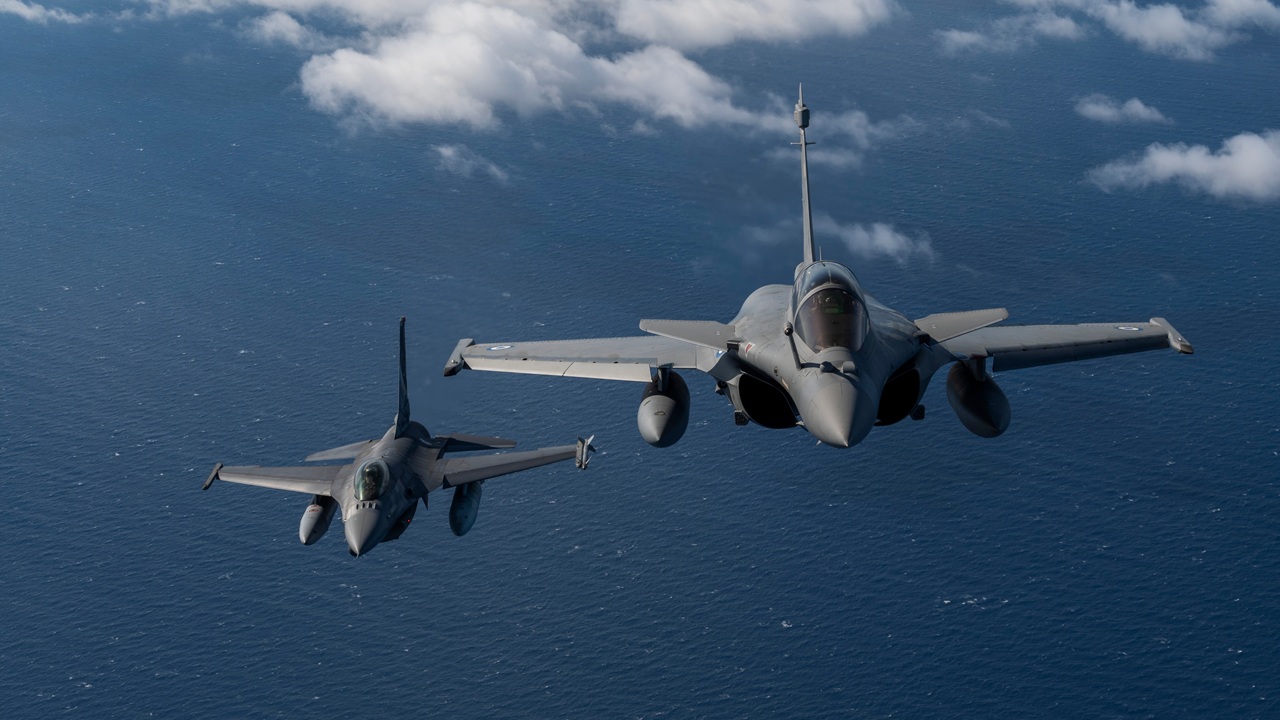
The Dassault Rafale represents Dassault’s most advanced platform ever built. Designed from the outset as a true multirole fighter, the Rafale can perform air superiority, deep strike, nuclear deterrence, and carrier operations. The aircraft’s key technical markers are advanced sensors, strong electronic warfare suite, and high systems integration. From a technical perspective, the Rafale emphasizes situational awareness over stealth, electronic warfare and networking, and flexibility across missions. This approach reflects the French doctrine prioritizing independent operations and expeditionary capability.
Initially, the Rafale struggled on the export market. But slowly, buyers emerged who were attracted to the Rafale’s combat-proven credibility and the political reliability of France as a supplier.
How Dassault Aids France’s National Security
Dassault has given France a variety of strategic benefits, namely, independent nuclear deterrence, freedom from US export controls, and full-spectrum air power without external approval. With Dassault’s product, France has shown that fighters are tools not just of defense, but of diplomacy.
Through the decades, Dassault has maintained trust and credibility with incremental improvements, reliance on proven technologies, and tight control over design authority. This conservatism has produced durable platforms that age well and perform as advertised.
Dassault’s future is tied to next-generation programs, however, like the FCAS, a joint sixth-generation program between France, Germany, and Spain, which has struggled with the political complexity of the partnership. Whether or not the FCAS culminates in a working fighter, or dissolves pre-production, expect Dassault to continue making conservative progress in the direction of information-centric systems. The company has continued a steady march of improvement, since offering early delta-wing interceptors, resulting in a coherent and successful fighter lineage that is poised to continue.
About the Author: Harrison Kass
Harrison Kass is a senior defense and national security writer at The National Interest. Kass is an attorney and former political candidate who joined the US Air Force as a pilot trainee before being medically discharged. He focuses on military strategy, aerospace, and global security affairs. He holds a JD from the University of Oregon and a master’s in Global Journalism and International Relations from NYU.
Image: Shutterstock / Faizinraz.
Finished reading? There’s more to explore.
Leave a Reply