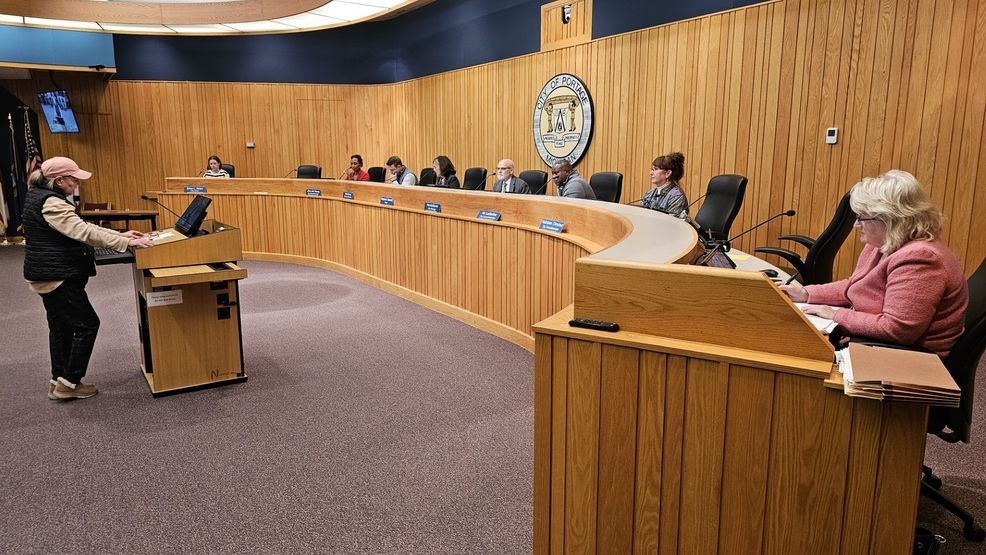
The City of Portage is considering a one-year moratorium on all new data center and battery energy storage system (bess) facility developments until officials are able to review potential impacts, as well as zoning rules and ordinances.
City leaders say the move is proactive, but follows similar projects being proposed in communities surrounding Kalamazoo and across Michigan.
The proposed moratorium could last up to 12 months if approved.
RECOMMENDED FOR YOU
Peter Dame, chief development officer for the City of Portage, said the city council decided it needed to evaluate if current ordinances properly protect the city from data centers and battery storage system type developments during its annual goal-setting session at the end of 2025.
- 2025 data center explosion: Developers target Midwest, communities fight back
“In researching the options for amending our city code, we decided that as a proactive measure, we should recommend a temporary moratorium for those types of uses in the Portage area,” Dame said. “Until such time as the city can adopt any changes in the regulations that might be necessary to protect the community from that type of development.”
Portage officials told News Channel that at this time the city has not received any applications for either type of facility, however, recent proposals in surrounding townships largely prompted the discussion to get ahead of the issue, according to Dame.
“We have an opportunity to evaluate what we need to do to make sure the city is protected,” Dame said.
“Concerns that people have about these types of developments are they’re very large, but they don’t have a lot of employees,” Dame said. “Noise, vibration, proximity to residential areas, depletion of water resources and impact on environment are kind of the big ones.”
Placement of any kind of large industrial facility within a city like Portage would come with limitations as is, according to Dame, including size and location.
“This type of use in a city would be regulated already and would typically be steered into an industrial zoned area,” Dame said.
Dame added that city officials will also be looking at whether current industrial zoning includes protections specific to this “unique type of development.”
This consideration comes at a time when the city is already in the middle of a grander zoning rewrite, according to Dame.
“We’re starting with the residential code and we haven’t yet started the commercial code, but this will likely get wrapped into the commercial code rezoning project that we have underway.”
He said the city’s goal is to finish the entire zoning project by the end of this year.
At this point, the planning commission will hold a public hearing.
Dame said everyone is invited to speak to share their own research, comments and concerns.
That public hearing is set for Thursday, Feb. 19, at 7 p.m.
Then, the final step in the process for establishing a moratorium will occur on Tuesday, Feb. 24, at 6 p.m., when the city council will read the ordinance and take a vote on whether to officially prohibit any applications for data centers or battery systems for up to one year.
While Portage considers restrictions, a new economic analysis from Anderson Economic Group, commissioned by Consumers Energy, points to potential benefits of data centers in Michigan.
“We built this model in December and January,” said Tyler Theile, vice president and director of the public policy and economic analysis practice area at Anderson Economic Group in East Lansing. “There was a realization that there was room for some education in the public discourse about the impacts of potential data centers in Michigan.”
Theile asserts that data centers can provide long-term economic activity that is crucial for our state.
“When someone comes in and they invest for a few years in construction and they bring in workers or employ our construction workers that otherwise might’ve been underutilized, that’s a boom to the economy,” he said. “And then when they operate for 20, 30, 40 years in an area, that’s additional spending that is not likely to otherwise have occurred.”
Smaller facilities, with only a couple dozen employees once construction wraps up, can make a difference too, according to Theile.
The study’s mid-size facility scenario, which includes about 25 full-time employees, cites about $128 million in economic impact annually, an equivalent contribution of two Detroit Lions playoff games or about five U of M v. Michigan State football games.
“And so obviously those opportunities don’t necessarily happen, right? Like MSU or U of M, that’s always gonna be a one year thing,” said Theile. “That’s really significant.”
Theile said current population trends in Michigan hover around stagnant or shrinking, making attracting new industries important.
- Related Coverage: ‘Biggest meeting ever’: Data center development concerns take over Marshall meeting
“We do have the opportunity to attract and retain folks in their middle years, growing families in their most productive decades of life, but if we don’t have the type of employment here in Michigan that they desire, we will miss out on that opportunity,” said Theile.
Theile said while she understands municipalities taking a pause and asking questions, but emphasized that Michigan already has regulatory protections in place.
“To guide using a closed looped water cooling system,” Theile said. “We have exit plate fees in place to deter any developer who might come in temporarily and then think they can ditch the development.”
Tax revenue is another major factor for consideration, Theile said.
“If you look at the fiscal section of our report, the tax revenue is undeniable,” Theile said. “You will receive additional tax revenue in your municipality with a development like this that you otherwise certainly would not have received.”
When it comes to developing the unknown, many supporters point to research and previous trends that indicate Michigan cannot afford to wait, while many challengers of data centers and battery energy systems assert that it’s too big, and too important to rush.
Dame said Portage’s approach is about taking time to study the issue before any proposal arrives.
“I think it’s a good idea, you know, (put a) temporary stop sign up and take some time to investigate,” said Dame.
Finished reading? There’s more to explore.
Leave a Reply