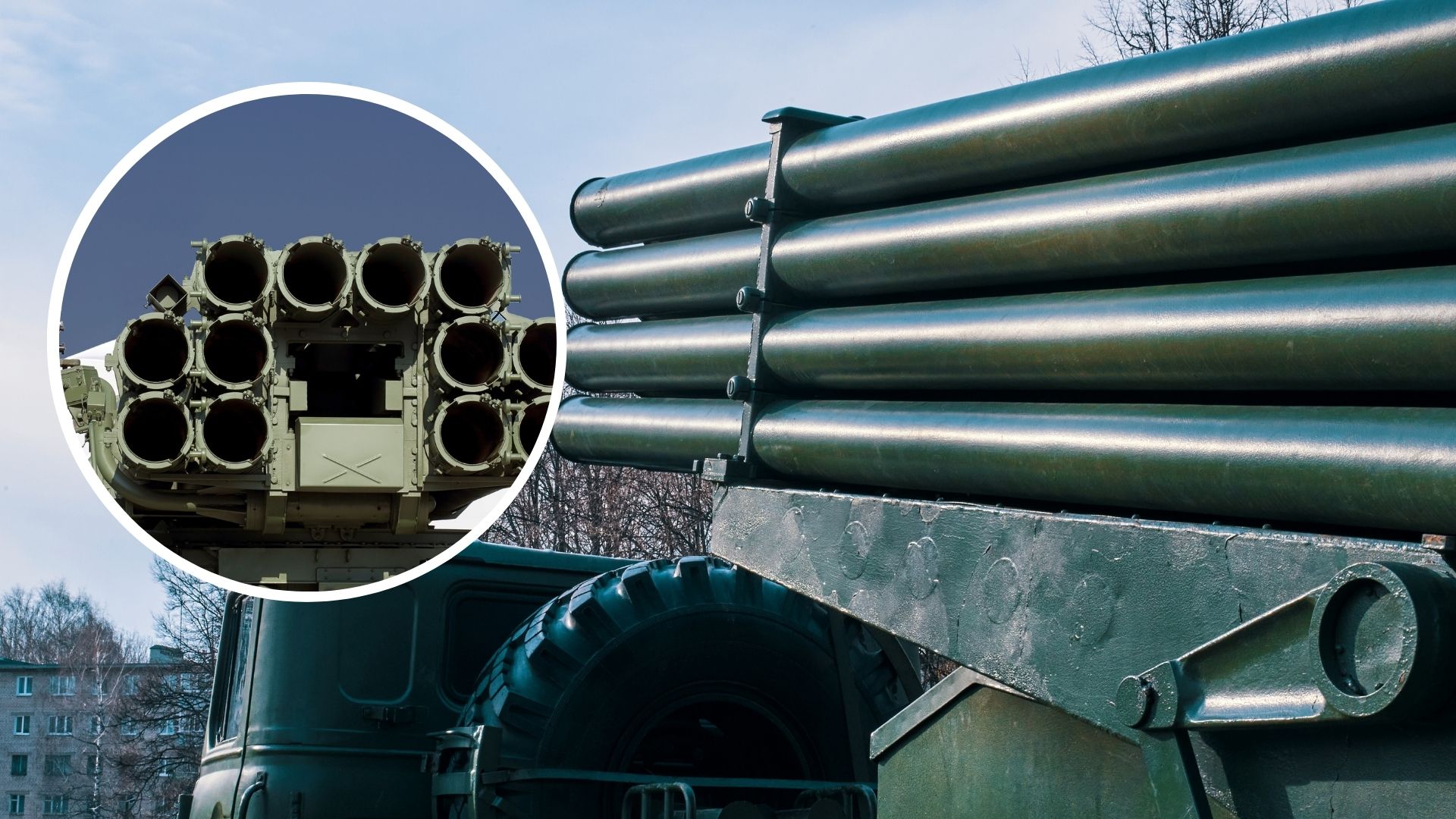
Russia has showcased its new multiple launch rocket system at the World Defense Show 2026. Called Sarma 300 mm Multiple Launch Rocket System, the highly mobile and precision-capable system was displayed at the event being held in Riyadh.
Currently, the weapon is being tested by the Russian Army in the special military operation zone.
Reports revealed that the weapon was showcased with Supercam S350 drone designed for target reconnaissance and target designation and the Planshet-A artillery fire control automation package.
RECOMMENDED FOR YOU
Operated by a small crew
The Sarma MLRS is mounted on an 8×8 wheeled military truck chassis, emphasizing speed, road mobility, and rapid redeployment. Unlike heavier tracked systems, this configuration allows the launcher to quickly move, fire, and relocate, reducing vulnerability to counter-battery strikes. The launcher carries six 300 mm rockets and is operated by a small crew working from within an armored cabin designed to protect against shrapnel and small-arms fire, according to reports.
A key feature of the Sarma system is its modern fire-control architecture. Automated targeting, navigation, and launch preparation systems are intended to shorten reaction times and improve accuracy compared with older Soviet-era rocket artillery. Russian sources indicate that Sarma can employ a range of existing and future 300 mm munitions, including high-explosive and guided rockets. Reported maximum ranges reach approximately 120 kilometers with current guided ammunition, with longer-range munitions under development.
Sarma offers precision
From an operational perspective, Sarma reflects a broader shift in Russian artillery doctrine toward greater precision, survivability, and mobility. While traditional MLRS emphasized massed fire and large salvos, Sarma is presented as a system capable of delivering fewer but more accurate strikes while minimizing exposure of its crew. Russian defense industry representatives have also promoted the system as a cost-effective alternative to Western wheeled rocket artillery systems, particularly for export markets in the Middle East and other regions.
Overall, the Sarma 300 mm MLRS represents an evolutionary rather than revolutionary development. Its significance lies in combining established rocket calibers with improved mobility, automation, and crew protection, signaling Russia’s intent to adapt its long-range fire capabilities to modern battlefield conditions and international market demands.
The system is designed to operate closer to the forward edge of the battlefield than legacy heavy MLRS platforms. Its reduced weight and compact architecture are intended to support rapid relocation after firing, allowing the launcher to limit exposure to counter-battery fire. Russian reporting suggests Sarma is expected to enter service in limited numbers, potentially within operational zones during 2026, where it would complement rather than replace heavier Tornado-S units, reported Army Recognition.
Russian media and analysts have framed Sarma as a potential rival to Western systems like the U.S. HIMARS — especially in terms of mobility and precision firepower — though direct performance comparisons are mixed and depend heavily on specific rockets and battlefield conditions.
Finished reading? There’s more to explore.
Leave a Reply