It’s been many years since hard drives were relevant for cutting-edge storage performance, but Western Digital’s new High Bandwidth HDD design could be the fastest hard drives yet.
I’ll always remember building my first gaming PC with a 36GB Western Digital Raptor hard drive. Sure, it made a grinding noise when in use, but it booted Windows XP in under 15 seconds. Even conventional hard drives are much faster than that 10,000 RPM monster these days, and PCIe SSDs are many 10s of times more speedy. But WD’s new hard drive design could close that performance gap, at least a little.
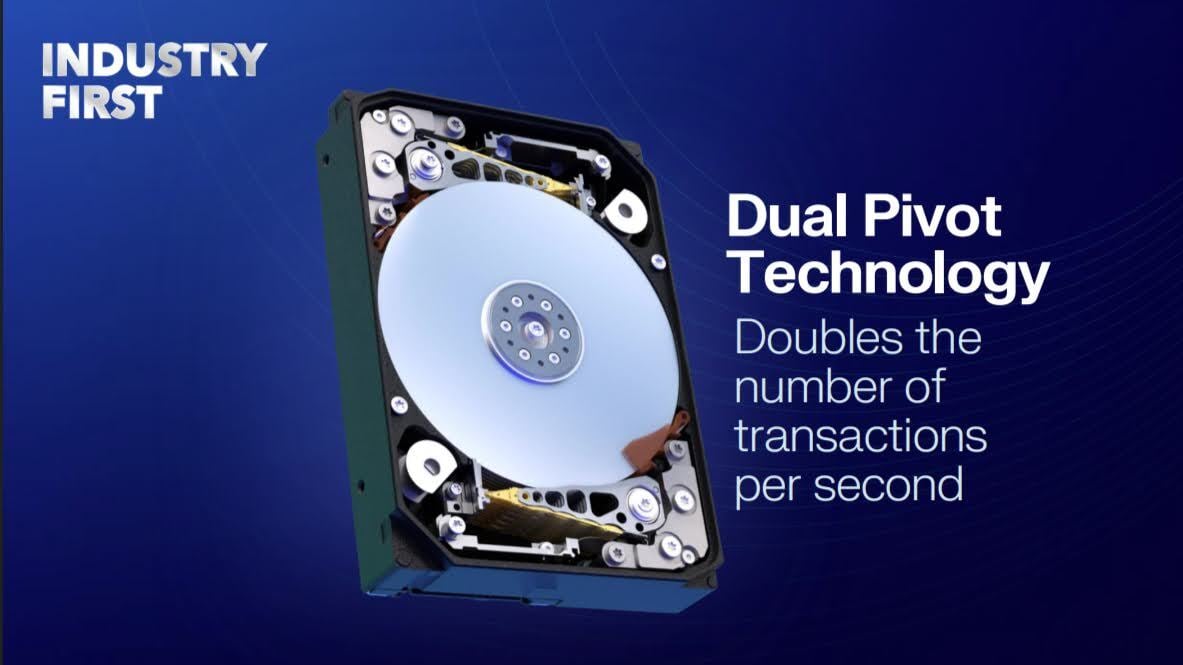
The company showed off two new hard drive designs at its recent Innovation Day: The High Bandwidth Drive Technology (HBDT) adds secondary read and write heads to the actuator, allowing for a doubling of overall bandwidth compared with conventional hard drives; and Dual Pivot Technology fits another independent actuator, so it has two arms accessing the drive at the same time, doubling conventional bandwidth and sequential I/O performance.
RECOMMENDED FOR YOU
In a blog post, Reed Martin, WD’s senior manager of global product marketing said that “combining HBDT (2-track) and dual pivot can boost throughput from 300MB/s to 1.2GB/s—a 4x increase.”
The technologies haven’t been used in conjunction, but Western Digital is testing it and expects it could increase hard drive performance by up to eight times by combining multiple actuators and multiple read/write heads on each actuator.
With the top hard drives of today, including external hard drives, having maximum transfer rates around 250 MBps, a doubling of performance would put them in the realm of classic SATA III SSDs. Quadruple it, and you’re into the kind of speeds you see from mid-tier external SSDs. If WD can eight times it, though, those hard drives would have sustained read/and write performance that’s not far off entry-level PCIe 3 SSDs.
The caveat there is that it’s only for sustained read and write performance and even then only with sequential data. Defragging hard drives still makes a big difference. Random access performance would still be many orders of magnitude slower than that of modern SSDs. This isn’t going to make hard drives competitive with SSDs again. That ship has well and truly sailed, outside of cost per terabyte at the extreme end.
But for those storing huge libraries of photos and videos, enterprise and business servers and workstations, as well as data centers, this is game-changing stuff. WD sees this combination of technologies as being a worthy competitor for cheap, QLC NAND-based SSDs. We shall see.
Finished reading? There’s more to explore.
Leave a Reply